Tell the Types of Models in Machine Learning Apart
Understand five machine learning model types, with examples and practical uses.
Overview of Machine Learning Models
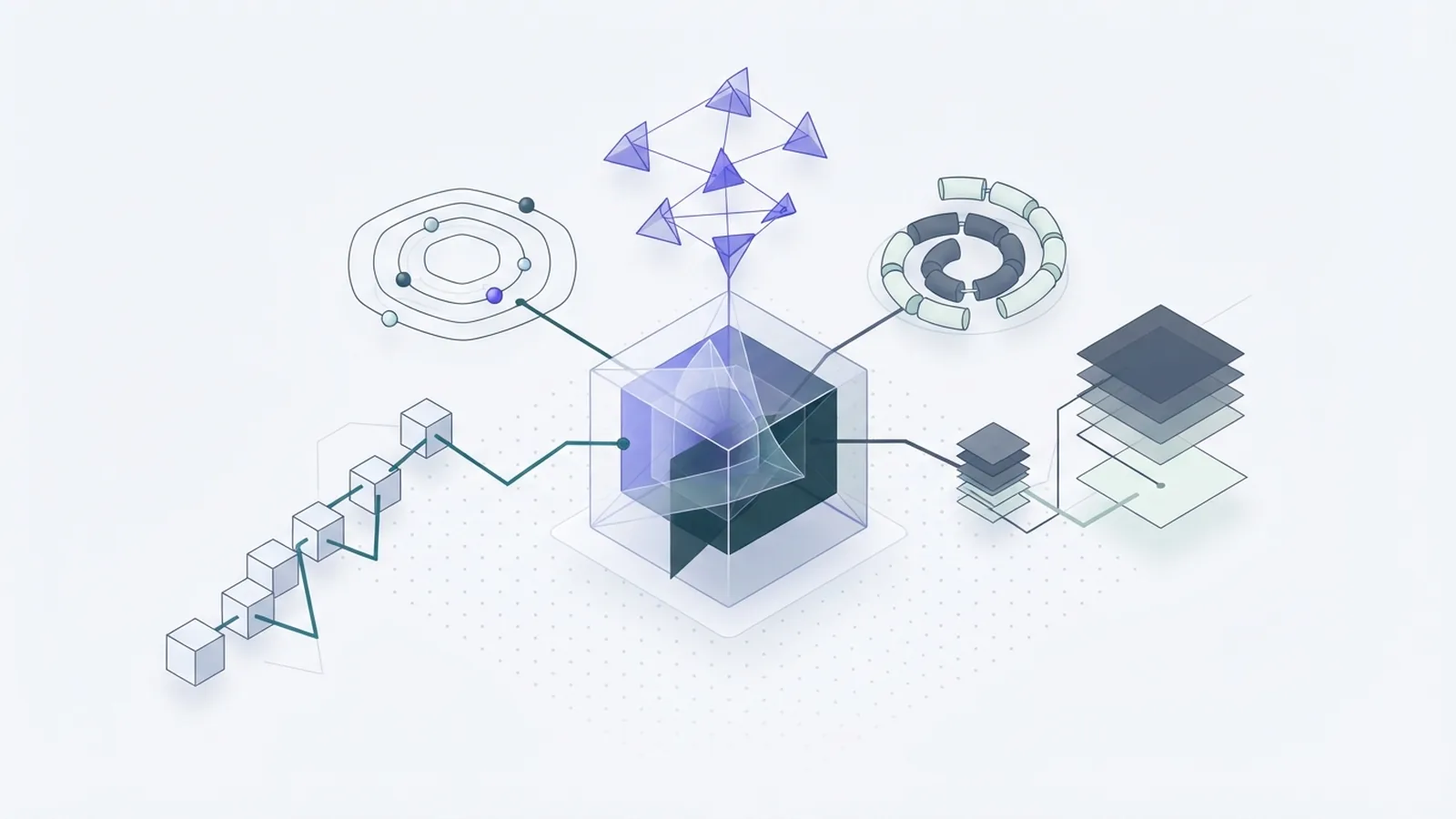
The main types of models in machine learning are supervised, unsupervised, semi-supervised, reinforcement, and self-supervised models. Each type learns from data in a different way. The right choice depends on your data, goal, and feedback.
A model is a system that finds useful patterns in data. It then uses those patterns to make predictions or decisions. For example, a model may spot fraud, group customers, or forecast sales.
Start with the question your model must answer. Do you have known answers for past examples? Do you only have raw data? Will the model learn from rewards? These questions narrow the choice quickly.
- Supervised learning: learns from data with known answers.
- Unsupervised learning: finds patterns in data without answers.
- Semi-supervised learning: combines a small labeled set with more raw data.
- Reinforcement learning: learns through actions, feedback, and rewards.
- Self-supervised learning: creates learning targets from raw data.
Supervised Learning Models
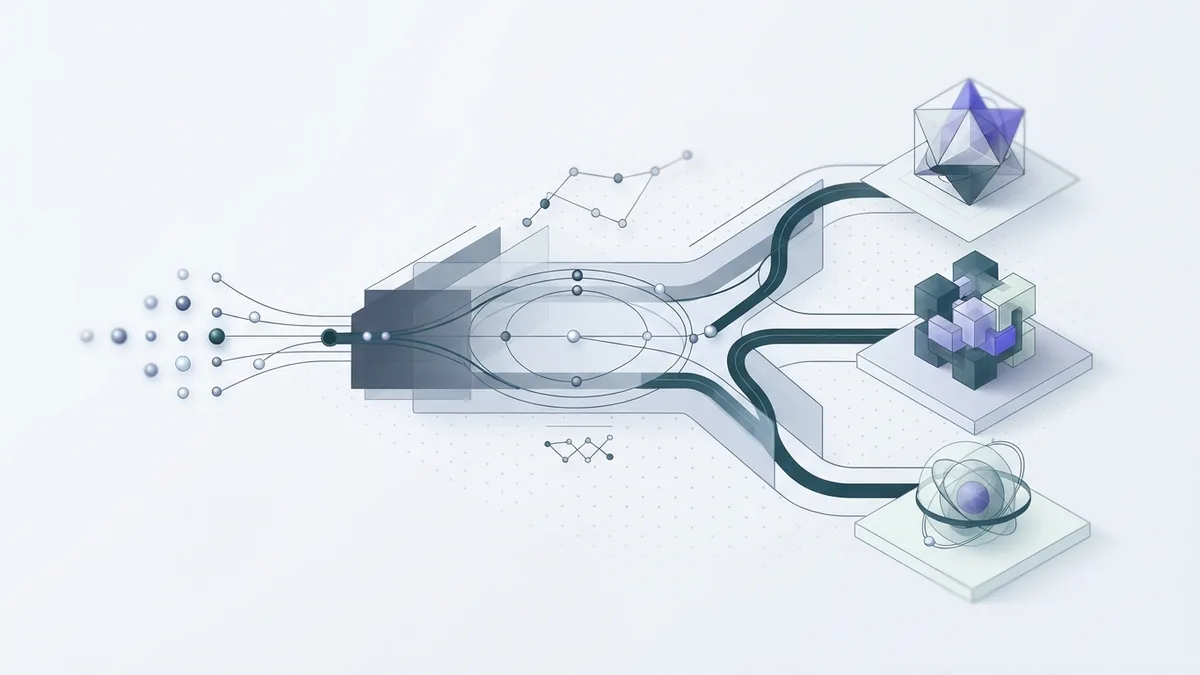
Supervised learning uses labeled datasets for training. Each example contains input data and a known target. The model learns the link between both parts.
Supervised tasks fall into two broad groups. Regression predicts a number, such as price or demand. Classification predicts a class, such as spam or not spam.
Common regression models
The types of regression models in machine learning differ in how they fit numeric outcomes. Linear regression draws a simple line through the data. It works well when features and outcomes have a fairly steady link.
Other choices include ridge regression, lasso regression, and polynomial regression. Ridge helps when features overlap. Lasso can remove weak features. Polynomial regression can fit curved trends.
Common classification models
Logistic regression estimates the chance of a class. Decision trees split data through a chain of simple rules. Support Vector Machines, or SVMs, find a boundary between classes.
Neural networks use layers of connected units. They can learn complex links in images, sound, and text. These are common types of classification models in machine learning.
| Model | Typical use | Main strength |
|---|---|---|
| Linear regression | Sales or price forecasts | Simple and easy to explain |
| Logistic regression | Risk or spam classes | Clear probability scores |
| Decision tree | Rule-based decisions | Easy to inspect |
| SVM | Small to medium class tasks | Strong class boundaries |
| Neural network | Images, speech, and text | Fits complex patterns |
To test a supervised model, split data into training and test sets. Use measures that match the task. Mean absolute error suits many forecasts. Accuracy, precision, recall, and F1 score suit many class tasks.
Unsupervised Learning for Hidden Patterns
Unsupervised learning works with unlabeled data. The model has no answer key during training. Instead, it seeks groups, links, or simpler forms of the data.
This approach helps when labels do not exist or take too long to create. It can reveal customer groups, unusual payments, or themes in support notes. Results still need review by a subject expert.
Clustering methods
Clustering places similar records into groups. K-Means sets a chosen number of groups and moves each record toward its nearest group center. It works best with scaled data and clear group shapes.
Hierarchical clustering builds a tree of related groups. You can inspect the tree before choosing a final cut. This helps when you do not know the group count in advance.
Dimensionality reduction
Principal Component Analysis, or PCA, turns many features into fewer combined features. It keeps much of the useful variation in the data. PCA can speed up training and help people view complex datasets.
Unsupervised models also support anomaly detection. An anomaly is a record that differs from normal behavior. For example, a bank may flag payments far outside a customer's usual pattern.
Semi-Supervised Learning
Semi-supervised learning uses both labeled and unlabeled data. A small set has trusted answers. A much larger set has no answers.
This setup fits real projects well. A specialist may need minutes to label one scan or document. The business may still have millions of raw examples.
The model first learns from the labeled set. It then uses patterns from the raw set to improve its view. Some methods create likely labels, called pseudo-labels, for high-confidence examples.
- Use trusted labels to set a sound starting point.
- Check confidence before adding model-made labels.
- Keep a clean test set with human-checked labels.
- Watch for wrong labels that spread through later training.
Semi-supervised learning often helps with image, speech, and document tasks. It does not remove the need for quality checks. Bad labels can still harm the final model.
Reinforcement Learning Through Rewards
Reinforcement learning trains an agent through trial and error. The agent takes an action in a setting. It then receives a reward or penalty.
The goal is to gain the most reward over time. The model must balance known good actions with new actions. This balance is called exploration and exploitation.
A game agent may gain points for reaching a goal. A robot tool may gain reward for moving safely. A delivery system may gain reward for short trips and on-time arrivals.
Key parts of a reinforcement system
- Agent: the learner that chooses actions.
- State: the facts the agent can see.
- Action: a choice the agent can make.
- Reward: feedback after that choice.
- Policy: the rule for choosing future actions.
Reinforcement learning suits tasks with a clear goal and repeated feedback. It can struggle when rewards are rare or unsafe actions cost too much. Careful testing matters before real-world use.
Self-Supervised Learning from Raw Data
Self-supervised learning trains a model on unlabeled data. It creates targets from the input itself. For example, it may hide part of a sentence and ask the model to predict it.
This method turns raw text, images, audio, or video into useful training data. The model first learns broad patterns. Teams can then adapt it to a smaller task with labeled examples.
Language models often predict missing or next tokens. Image systems may predict hidden image parts. Audio systems may predict masked sound segments.
Self-supervised learning can cut the need for manual labeling. It also supports deep learning systems with many model layers. Its results depend on the quality and range of the raw data.
Where Machine Learning Models Are Used

The different types of models in machine learning serve different business needs. A forecast model may guide stock levels. A class model may sort claims for review.
Many systems use more than one model type. An unsupervised model may group users first. A supervised model may then predict churn within each group.
| Field | Example task | Useful model types |
|---|---|---|
| Retail | Demand and product suggestions | Regression, clustering |
| Finance | Fraud and credit risk | Classification, anomaly detection |
| Health care | Scan and patient risk review | Classification, neural networks |
| Manufacturing | Machine fault alerts | Anomaly detection, classification |
| Media | Search and content ranking | Neural networks, reinforcement learning |
Pick the simplest model that meets the need. A clear model can be easier to test and explain. A larger model may help when the data has rich images, sound, or language.
How to choose a model type
- Define the outcome and the cost of a wrong result.
- Check whether your data has trusted labels.
- Set aside test data before model training begins.
- Compare a simple baseline with stronger methods.
- Test the model on new cases and edge cases.
- Track results after launch and retrain when data changes.
The best model is not always the most complex one. It must fit the data, task, risk, and team skills. Good model evaluation turns that choice into a measurable decision.
Choosing Among the Main Learning Types
Use supervised learning when past examples have reliable answers. Choose unsupervised learning when you need to explore raw data. Choose semi-supervised learning when labels cost too much.
Use reinforcement learning for repeated choices with clear rewards. Use self-supervised learning when large raw datasets can create training targets. These types of learning models in machine learning can also work together.
Begin with the data you have today. Define success with a metric and a business result. Then test a small baseline before building a larger system.
Frequently asked questions
- What are the main types of models in machine learning?
- The main types are supervised, unsupervised, semi-supervised, reinforcement, and self-supervised learning. Each type uses data and feedback in a different way.
- What is supervised learning in machine learning?
- Supervised learning trains on labeled data with known answers. Regression predicts numbers, while classification predicts classes.
- What are common supervised learning models?
- Common models include linear regression, logistic regression, decision trees, Support Vector Machines, and neural networks. The best choice depends on the task and data.
- What is the difference between supervised and unsupervised learning?
- Supervised learning uses known labels during training. Unsupervised learning finds patterns in data without known labels.
- When should I use semi-supervised learning?
- Use it when you have a small labeled set and much more unlabeled data. It can reduce labeling work when expert review costs a lot.
- How does reinforcement learning work?
- An agent takes actions and receives rewards or penalties. It learns a policy that seeks higher rewards over many decisions.
Related reading

What Is an AI Agent? How It Works and Where It Helps
See how AI agents plan tasks, use tools, and work within clear limits.

Agentic AI — How It Works, Where It Helps, and What to Watch
See how agentic AI plans tasks, uses tools, and needs human checks.

AI Workflow Automation — How It Works at Work
See how AI can handle routine work, guide decisions, and link business processes.