Build AI Agents from Scratch (Beginner Path)
Build your first AI agent with simple tools, clear steps, and beginner-friendly tips.

Start Here: What AI Agents Do
To build AI agents for beginners, start with one clear task. An AI agent takes input, chooses an action, and returns a result. It may answer questions, search files, call tools, or update a record.
Unlike a basic script, an agent can choose its next step. It uses a model, rules, memory, and tools. The model handles language. The tools let the agent act outside the chat.
Common examples include chatbots, virtual assistants, research helpers, and support agents. A support agent might read a question, search a help center, and draft a reply.
Keep the first project small. A narrow goal makes testing much easier.
- A chatbot answers common customer questions
- A virtual assistant sorts tasks and sends reminders
- A research agent finds facts from trusted files
- An automation agent moves data between work tools
The Main Parts Inside an AI Agent

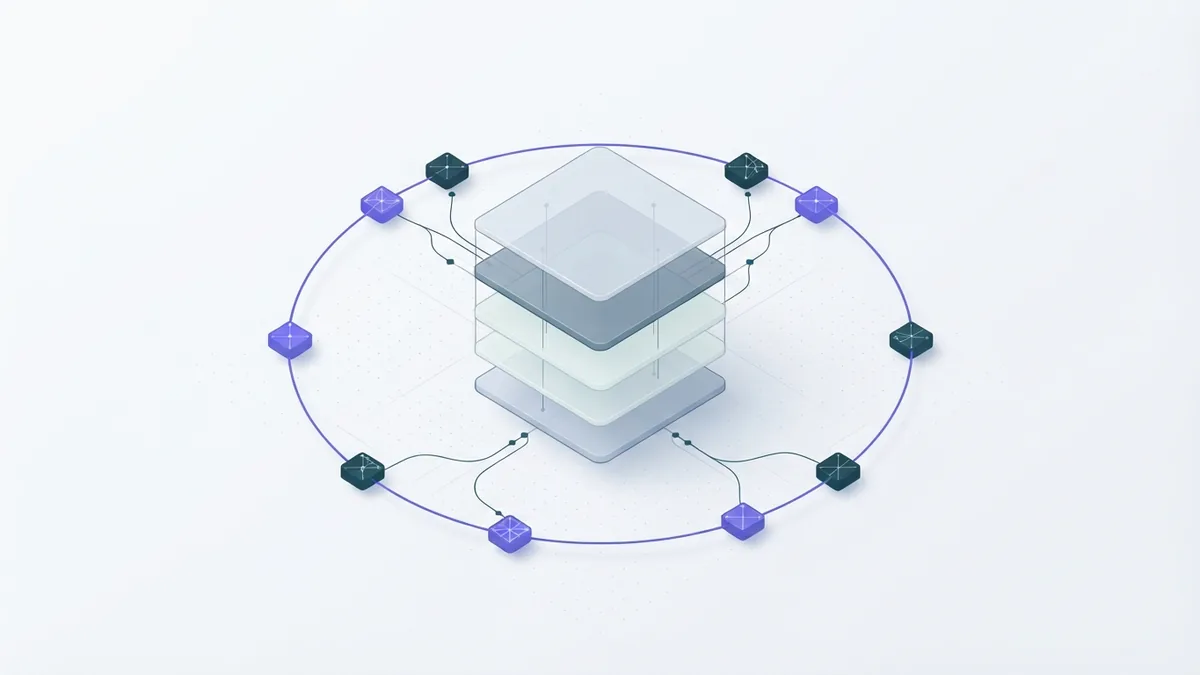
Most agents share five basic parts. These parts work together in a loop. The loop starts with a user request and ends with an answer or action.
The model reads the request and plans a response. A prompt gives it goals, limits, and useful context. Tools let it call a search system, database, or web service.
Memory stores useful details from past turns. Short memory covers the current chat. Long memory can store approved facts for later use.
Guardrails set limits around risky actions. They can block unsafe requests, require approval, or limit tool access. Human review still matters for payments, private data, and legal work.
| Part | Purpose | Simple example |
|---|---|---|
| Model | Understands requests and drafts replies | Language model |
| Prompt | Sets the agent's role and rules | Support policy |
| Tool | Lets the agent take action | Search or calendar |
| Memory | Keeps useful context | Past customer issue |
| Guardrail | Limits unsafe actions | Approval before sending |
Choose Tools That Match Your Skill Level

Python is a strong first choice for software development. It has clear syntax and many AI libraries. Learn variables, loops, functions, lists, and basic web requests first.
n8n suits visual automation. You connect steps in a workflow and add an AI node. This makes it useful when you want to build AI agents without coding.
Dialogflow helps you build chat experiences. It supports intents, replies, and links to outside services. It can suit teams that want a managed chat platform.
Code-based tools give you more control. Visual tools help you test ideas faster. The best platform to build AI agents depends on your goal, budget, and coding skill.
For model-based work, read the OpenAI agents documentation. It explains core agent patterns from the model provider's view.
- Choose Python for flexible code and deeper learning
- Choose n8n for visual workflows and fast tests
- Choose Dialogflow for managed chat flows
- Choose a hosted model API when you need fast setup
Build a Simple AI Agent Step by Step
Use one small project to learn how to build AI agents. A helpful first project is a study helper. It can answer questions from a short set of notes.
- Set one goal. Write what the agent should do and what it must not do. For example, it should answer from your notes only.
- Prepare the source. Gather five to ten pages of clean notes. Remove private data and fix unclear sections.
- Write the prompt. State the role, task, answer style, and limits. Ask the agent to say when it lacks enough proof.
- Add one tool. Connect a file search or simple database. Start with one tool instead of a large tool set.
- Build the loop. Send the request to the model, inspect its choice, and run the tool. Then pass the result back for a final answer.
- Test real questions. Use easy, unclear, and hostile questions. Save each input, tool call, and final answer.
- Improve one issue. Change the prompt, source, or tool rules. Test the same questions again after each change.
This process answers “how do you build AI agents?” with a repeatable method. Start with one model and one tool. Add more only when tests show a clear need.
Testing is not a final task. It is part of the build loop. Check answer quality, speed, cost, and failure rate.
Test, Measure, and Improve the Agent
Good agents need more than smooth demos. Make a test set with at least 20 questions. Include normal requests, missing facts, confusing wording, and requests outside the agent's role.
Score each answer with a simple scale. Use zero for wrong, one for partly useful, and two for correct. Track tool errors and made-up claims as separate issues.
Watch the agent during real use. Review logs without storing private data. Ask users where the answer failed or took too long.
Change one part at a time. A new prompt may fix tone but hurt fact accuracy. Small changes make the cause easier to find.
- Check whether answers use the right source
- Check whether tools run only when needed
- Check response time and model cost
- Check refusals for unsafe or unknown requests
- Check whether a human can stop risky actions
Learn Through Courses and Small Projects
If you want to learn how to build AI agents, mix lessons with practice. A course can explain models and prompts. A small project turns those ideas into working skill.
Start with Python basics and web requests. Then study natural language processing, prompt design, and API use. After that, build one agent with a file search tool.
Use official tutorials for the platform you choose. The Dialogflow documentation covers its chat tools and setup. n8n's own courses can help with visual workflow design.
A useful six-week plan is simple. Spend week one on Python or workflow basics. Spend weeks two and three on prompts and tool calls. Use the last three weeks for a tested project.
- Build a note-based study helper
- Build a support reply drafter
- Build a meeting note sorter
- Build a safe form-filling workflow
Build a Team of AI Agents Without Chaos
Some projects use several agents. One agent may plan, another may search, and a third may check the result. This can help with large tasks, but it also adds more failure points.
Give each agent one clear role. Define its inputs, outputs, tools, and limits. Use a shared format so each agent can pass work to the next one.
Teams also need clear human roles. Assign one person to own the product goal. Assign another to review tests and safety. Keep code, prompts, test data, and decisions in shared version control.
Run short reviews after each test round. Discuss failed cases, cost changes, and new risks. Do not add another agent until the current flow works well.
| Team role | Main duty |
|---|---|
| Product owner | Sets the user goal and success measure |
| Builder | Creates prompts, tools, and workflow code |
| Test lead | Runs test cases and tracks failures |
| Safety reviewer | Checks data access and risky actions |
Take the Next Step
You do not need advanced machine learning skills to start. Learn basic code, pick one narrow task, and use one tool. Then test the result with real questions.
The best path for how to learn to build AI agents is hands-on work. Build a small agent this week. Keep its goal clear, record its failures, and improve one part at a time.
Once the agent works, add better data, stronger checks, or a second tool. Move slowly when the agent can change records or send messages. Reliable agents grow from clear limits and steady testing.
Step-by-step
- 01 Set one goal
Choose one narrow task and define what the agent must not do. Write a simple success measure.
- 02 Prepare the source
Gather a small set of clean notes or records. Remove private data before use.
- 03 Write the prompt
Set the agent's role, task, answer style, and limits. Tell it how to handle missing facts.
- 04 Add one tool
Connect one search, file, or database tool. Keep the first build small.
- 05 Build the loop
Send the request to the model, run the chosen tool, and return the result for a final answer.
- 06 Test and improve
Run normal, unclear, and unsafe questions. Change one part after each test round.
Frequently asked questions
- How do beginners build AI agents?
- Choose one small task, pick a model tool, add one data source, and test the results. Python, n8n, and Dialogflow can all support a first project.
- Can I build AI agents without coding?
- Yes. Visual tools such as n8n can connect models, data, and actions. Basic code still helps when you need custom rules or deeper control.
- What programming skills do I need to build AI agents?
- Start with variables, loops, functions, lists, and web requests. Python is a common first language because its syntax is easy to read.
- Where can I build AI agents?
- You can build them in Python, n8n, Dialogflow, or a hosted model platform. Choose based on your task, budget, need for control, and team skills.
- How do I test an AI agent?
- Create at least 20 test questions across normal, unclear, and unsafe cases. Score answers, track tool errors, and improve one part at a time.
- How do I build a team of AI agents?
- Give each agent one clear role, input format, output format, and tool limit. Add shared tests and human review before adding more agents.
Related reading
Use AI in Real Estate to Work Smarter
See how AI can save time, find leads, and improve client service.
Learn AI and Machine Learning — Build Skills That Last
Build your AI skills with a simple path from Python to real projects.

Training Your Own AI Model (From Data to First Prediction)
A clear guide to training AI models with your own data.