AI Agents — How They Work and Where They Help
See how AI agents work, where they help, and what teams must manage.

What Are AI Agents?
What are AI agents? They are software systems that take in information, choose steps, and act toward a goal. Many can plan, use tools, check results, and adjust their next move. They may need little human input for routine work.
If you are asking, “AI agents, what are they?” think of software that can do more than answer a prompt. A chatbot replies to a request, while an agent can carry out a chain of tasks. An AI assistant may suggest an action, while an agent may take that action within set limits.
So, what do AI agents do? They handle work such as finding information, updating records, or routing a request. A support agent might check an order, apply a refund rule, and draft a reply. A person can review the result or approve a high-risk step.
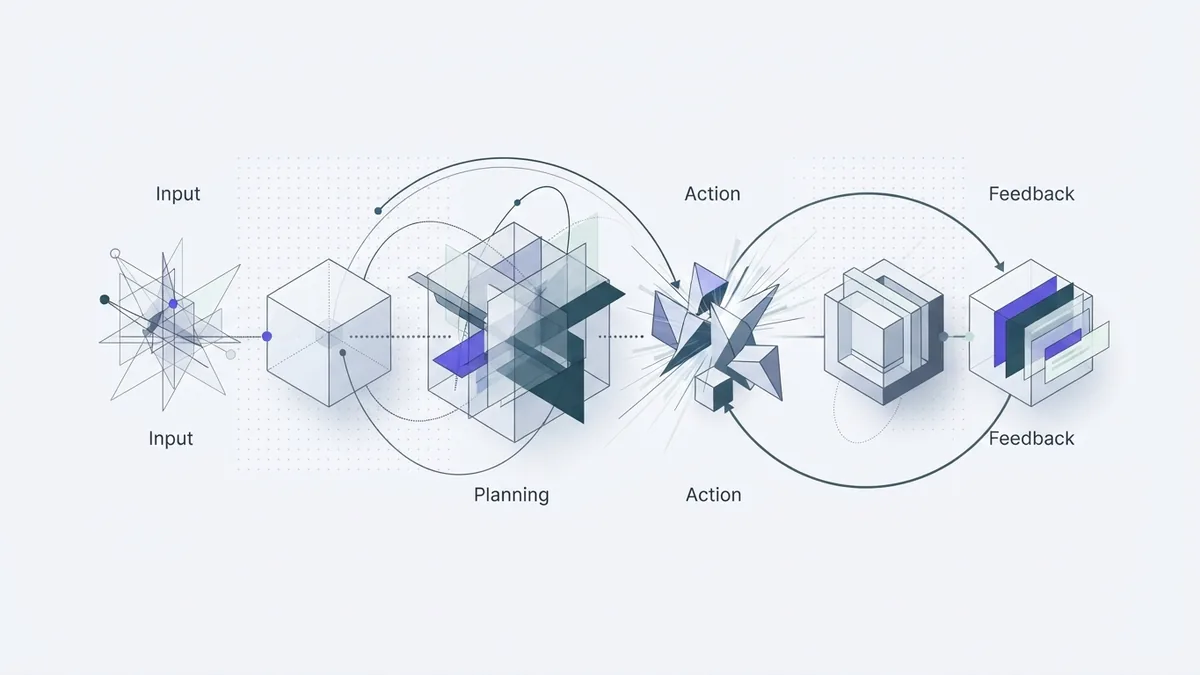
What is a key feature of AI agents? Their ability to act in a loop. They take in input, make a choice, use a tool, then check what happened. That loop helps them finish multi-step tasks rather than stop after one response.
- Agents work toward a stated goal.
- They can break work into smaller steps.
- They use approved tools to act on information.
- People set limits and review risky actions.
Core Components: Skills, Tools, and Decisions
Most agents rely on five core parts: perception, reasoning, planning, action, and learning. Perception means taking in a request, file, or sensor reading. Reasoning helps the agent decide what that input means. Planning turns a goal into a sequence of tasks.
Action is the point where the agent calls a tool or changes a system. What are tools in AI agents? They are approved links to services, such as search, calendars, or stock records. The agent can use them to fetch facts or carry out a task.
What are skills in AI agents? A skill is a defined task the agent knows how to perform, such as finding a policy or booking a meeting. Skills often combine instructions with one or more tools. Clear limits help keep each skill focused.
Learning lets an agent use feedback to improve later choices. In many products, this means changing rules or prompts, not changing the model itself. Teams should keep a record of tool calls and results. These logs help them spot faults and explain what happened.
- Perception: gather useful input.
- Reasoning: choose what should happen next.
- Planning: break a goal into tasks.
- Action: use approved tools.
- Learning: use feedback to tune later choices.

Types of AI Agents
Reactive agents respond to the current input with set rules. Model-based agents also track the state of a task or the world around them. Goal-based agents choose actions that move toward a stated result.
Utility-based agents compare options against aims such as speed, cost, or accuracy. Learning agents use new data or feedback to improve their choices. Multi-agent systems use several agents that share work or pass results between them. One product can mix these types.
Agents also differ by how they interact, how complex their work is, and how narrowly they are tuned. A simple agent might sort requests. A specialist agent might check invoices against fixed rules. A broad agent may handle longer workflows, but it needs stronger checks.
What are the AI agents a company should consider? Start with the work, not the product label. Ask what goal an agent serves, what tools it can use, and how much freedom it needs. What AI agents are available changes as products evolve, so test options against your task and rules.

How AI Agents Work and How to Orchestrate Them
An agent starts with a goal and the information it needs. It makes a plan, takes one step, and checks the result. If the work is not done, it may change its plan or try another approved action. A person can step in when the task hits a limit.
Consider an agent that prepares a weekly sales summary. It can gather figures, check for missing values, compare results with the prior week, and draft a report. A staff member can check the figures before the report goes out. That review matters when errors could shape a business choice.
How to orchestrate AI agents starts with mapping the workflow. Mark which steps need an agent, which need a person, and what data each step can reach. Then set approval points, failure paths, and a way to stop a run. Try both common cases and edge cases, such as missing data.
To orchestrate multiple agents, give each one a clear role and handoff rule. One agent might gather facts while another checks them. A coordinator can track progress and send each task to the right agent. The NIST AI Risk Management Framework offers a trusted way to think about AI risks across this work.
How to manage AI agents in daily use? Track their actions, review errors, and keep access tied to each role. Use a sandbox, a safe test space, when checking new tools or workflows. Set a human review step for actions that affect money, safety, or private data.

What Are AI Agents Used For?
What are AI agents used for? They can handle repeatable work that spans several steps. In finance, an agent might sort invoices or flag unusual entries for review. In healthcare, it might help staff find records or route routine requests. A clinician must still make care decisions.
In education, agents can help learners find course material or give practice based on a lesson. In retail, they can check stock, answer order questions, or help route returns. These tasks can save staff time and help customers get a faster reply. The best fit depends on data quality and risk.
How are companies using AI agents? Many start with internal tasks, such as searching company knowledge or drafting routine updates. A CRM agent might summarize a customer record or suggest a next step. Who makes the best CRM AI agents depends on the firm’s needs, data access, and review rules.
What can AI agents be used for? Good starting points include work with clear rules, known data, and a way to check the result. Before a wider launch, measure time saved, error rates, and staff effort. What can I do with AI agents in my own team? Pick one slow, repeatable task and test a narrow agent first.
Benefits, Limits, and What Comes Next
Agents can reduce manual steps and keep routine work moving outside normal work hours. They can also help staff find information across several systems. This works best when the task has a clear goal and the agent can check its work.
There are limits. Agents can make mistakes, use poor data, or act in ways their builders did not expect. Why do AI agents hallucinate? A model may give a likely-sounding answer when it lacks reliable facts. Tool checks, source limits, and human review can lower that risk.
Building and running agents can be complex. Teams need to choose suitable workflows, set access rules, test failure cases, and keep watch after launch. Poorly chosen tasks can add work instead of saving it. Start small and expand only when results are sound.
How to scale AI agents? Reuse tested skills, set shared rules, and track results across tasks. Do not give every agent broad access by default. Pricing also varies by tool use, model use, and support needs, so compare the full cost with the work saved.
What comes after AI agents will depend on better tools, clearer rules, and stronger links between systems. When will AI agents be available? Many are available now, but their fit varies by task and risk. IBM and other vendors offer agent products and research, yet no single choice suits every team. Treat agent claims as a reason to test, not as proof of value.
Frequently asked questions
- What are AI agents?
- AI agents are software systems that take in information, plan steps, and act toward a goal. They can use tools and check results.
- What do AI agents do?
- They carry out multi-step tasks, such as finding information, updating records, or routing requests. People can set limits and review key actions.
- What are skills in AI agents?
- Skills are defined tasks an agent can perform, such as searching a knowledge base. A skill may use one or more approved tools.
- What are AI agents used for?
- Companies use them for repeatable work in areas such as finance, healthcare, education, and retail. Good tasks have clear rules and checkable results.
- How do you manage AI agents safely?
- Limit each agent's data access, log its actions, and test edge cases. Add human review when actions affect money, safety, or private data.
Related reading

What Is an AI Agent? How It Works and Where It Helps
See how AI agents plan tasks, use tools, and work within clear limits.

Agentic AI — How It Works, Where It Helps, and What to Watch
See how agentic AI plans tasks, uses tools, and needs human checks.

Build AI Agents from Scratch (Beginner Path)
Build your first AI agent with simple tools, clear steps, and beginner-friendly tips.